

Last updated: June 2026
Your token launch is three weeks away. You’ve spent six months building the protocol, writing documentation, and securing audits. Now you face the moment every founder dreads: opening an empty Discord server and watching the member count sit at 3 (you, your co-founder, and a bot). Without community traction, your launch will land with a thud regardless of how innovative your technology is.
This exact scenario plays out dozens of times per month in crypto. According to The Block, community engagement correlates directly with token performance and project longevity. Yet most teams approach their crypto community building strategy like a marketing afterthought rather than the foundation of their entire ecosystem.
The problem isn’t lack of effort. The problem is that building crypto communities requires completely different tactics than traditional social media marketing. Your Twitter followers won’t automatically join Discord. Your email subscribers won’t migrate to Telegram. And even when people do join, keeping them engaged past the first 48 hours becomes the real challenge.
This guide walks through 12 specific problems crypto projects face when building communities, with tactical solutions for each. No generic advice about “being authentic” or “providing value.” Just the frameworks, tools, and specific approaches that work for DeFi protocols, Layer 1 chains, and token launches.
What You Need Before Building Your Community
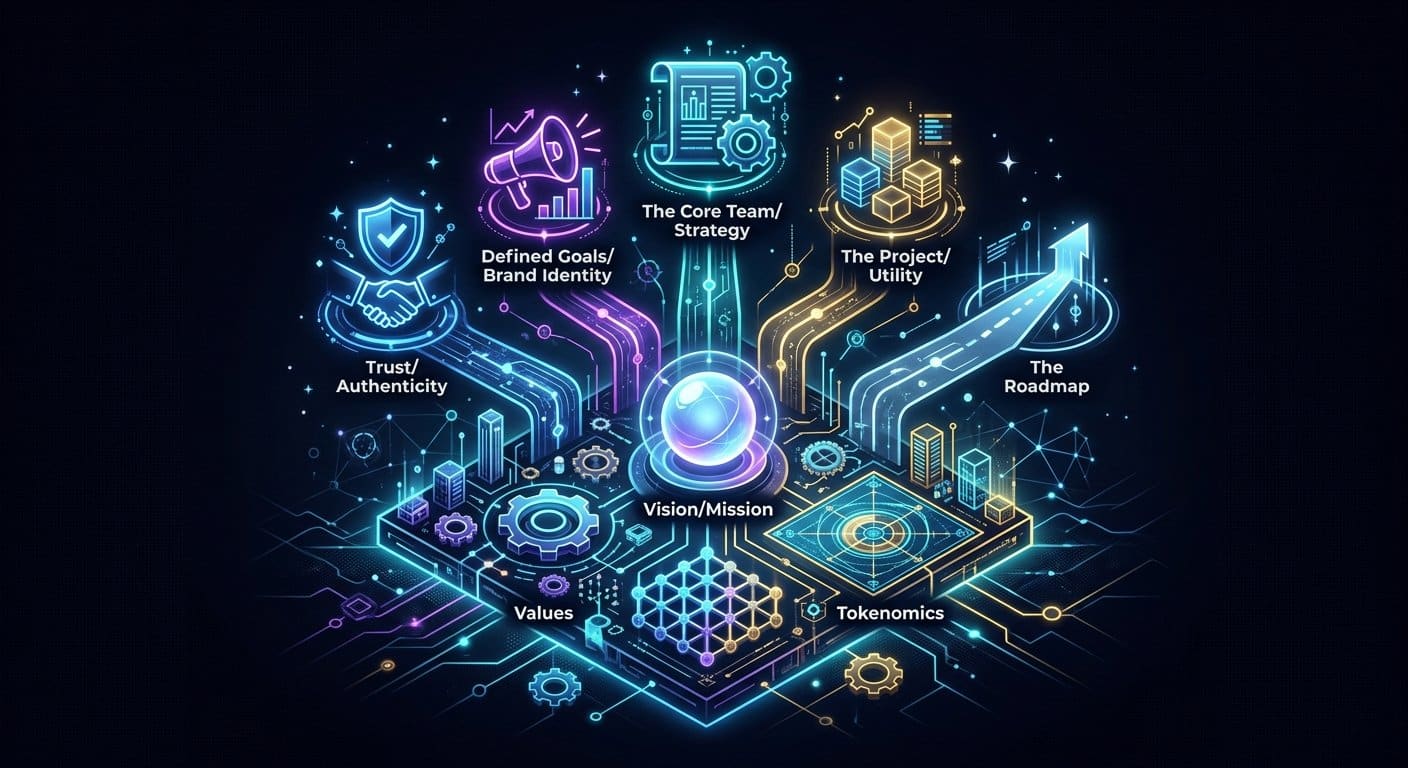
Before you create a single channel or send your first invite, you need three foundational elements in place. Skip these and your community will fragment or die within weeks.
First, you need a clear community value proposition. This isn’t your project value proposition. This is the specific answer to: “Why should someone spend time in your community versus the thousand other crypto Discord servers?” For a DeFi protocol, this might be early yield strategy alpha. For a Layer 1 chain, it could be direct access to core developers. Research from Investopedia shows that community retention rates drop by 70% when members can’t identify a specific reason to return after joining.
Second, you need documentation ready. New members will immediately ask about tokenomics, team credentials, roadmap milestones, and use cases. If moderators are scrambling to answer these questions individually, you’re wasting hundreds of hours. Create a pinned FAQ channel, a welcome bot with automatic responses, and a #start-here channel with links to essential resources.
Third, you need at least two dedicated community managers working opposite shifts to provide 16+ hour coverage. Communities die during coverage gaps. When someone joins at 2 AM UTC and asks a question that sits unanswered for 8 hours, they leave and never return. Budget $4,000-$8,000 monthly for proper community management before you even start recruiting members.
1. Choosing Between Discord and Telegram for Your Primary Hub
Problem: Most crypto projects try to build active communities on both Discord and Telegram simultaneously during launch, splitting their already small member base across two platforms and making both feel empty.
Solution: Pick one primary platform based on your project type and geography, then use the other purely for announcements. Discord works better for complex projects requiring multiple discussion channels, threaded conversations, and role-based access. Telegram performs better for geographically distributed communities in Asia, Latin America, and Eastern Europe where Discord adoption remains lower.
Here’s the decision framework: If your project is a DeFi protocol with multiple pools, governance discussions, and technical support needs, Discord provides the structure you need. Create separate channels for general discussion, technical support, governance proposals, and yield strategies. Use roles to separate different user tiers (token holders, liquidity providers, new members).
If your project is targeting retail investors in emerging markets or your community skews heavily Asian, Telegram becomes the better choice. According to Forbes, Telegram hosts over 500 million active users with particularly strong adoption in crypto trading communities. The platform’s simplicity and mobile-first design makes it ideal for quick announcements and trading discussion.
The mistake is trying to maintain equal activity in both. Instead, establish one as your primary engagement hub and mirror only major announcements to the secondary platform. For example, if Discord is your main community, create a Telegram channel that’s explicitly labeled as “announcements only” with a bot that mirrors your Discord announcement channel.
| Factor | Discord | Telegram |
|---|---|---|
| Best For | Complex projects, Western markets, technical communities | Simple announcements, Asian markets, trading-focused communities |
| Organization | Multiple channels, roles, threaded discussions | Single stream, simple groups, pinned messages |
| Moderation | Advanced bots, verification systems, role permissions | Basic admin tools, slower bots, limited automation |
| Growth Speed | Slower, higher quality members | Faster, more bot/spam issues |
| Typical Engagement Rate | 8-15% weekly active | 15-25% weekly active |
2. Creating an Onboarding Flow That Converts Lurkers Into Contributors

Problem: 70-80% of new community members never send a single message. They join, lurk for a day or two, then disappear. Your member count climbs but your active user count stays flat.
Solution: Implement a structured onboarding sequence that guides new members through specific actions within their first 48 hours. This isn’t about bombarding them with information. It’s about creating clear next steps that transform passive observers into active participants.
Start with a verification gate using bots like Collab.Land or Guild.xyz. This immediately separates real humans from bots and creates a first action (connecting a wallet or completing verification). Once verified, new members land in a #start-here channel with exactly three actions:
- Introduce yourself in #introductions with a specific prompt (not “tell us about yourself” but “What’s the last crypto project you used and why?”)
- React with an emoji to claim role tags that determine which channels they see (trader, developer, investor, content creator)
- Complete a simple quiz or scavenger hunt about the project to unlock full access
The scavenger hunt approach works particularly well. Create 5 questions where answers are found in your documentation, pinned messages, or website. Users must submit answers to a bot, which then grants them a “Community Member” role with full channel access. This forces engagement with your core materials while creating a small accomplishment feeling.
From campaign data across multiple Web3 projects, onboarding flows that require 2-3 small actions within the first hour see significantly higher 30-day retention compared to open-access communities. The friction filters out low-intent members while activating those genuinely interested.
3. Structuring Channels to Encourage Discussion Not Chaos
Problem: New Discord servers either create too many channels (fragmenting discussion) or too few channels (creating chaotic noise where finding information becomes impossible).
Solution: Use the 3-Tier Channel Framework: Core (3-5 channels for essential activity), Specialized (4-6 channels for specific topics), and Archive (read-only channels for announcements and resources).
Your Core tier should include:
- #general for casual conversation unrelated to your project
- #project-discussion for questions and conversations about your protocol
- #support for technical help and troubleshooting
- #price-discussion for trading talk (this contains price speculation that would otherwise pollute other channels)
The Specialized tier depends on your project type. For a DeFi protocol, add #governance, #yield-strategies, #partnerships. For a Layer 1 blockchain, add #developers, #validators, #ecosystem-projects. The key is that each specialized channel should have a clear purpose statement and active moderation.
The Archive tier contains announcement channels, FAQ repositories, and resources. These are read-only or heavily moderated. Members can read but not post. This includes #announcements, #updates, #media, #documentation.
Start with fewer channels than you think you need. It’s easier to split a busy channel than merge dead channels. Launch with 8-10 total channels, then add more only when a specific channel consistently hits 200+ messages per day and conversations about distinct topics start overlapping.
Voice Channels and Events
Create 2-3 voice channels: one general voice, one for AMAs and events, one for community hangouts. Don’t create voice channels for every text channel. They’ll sit empty and make your server look dead. Instead, host scheduled events (AMAs, community calls, trading sessions) that funnel people into voice at specific times.
Discord’s Stage Channels work better than regular voice for formal events. Speakers get stage access while the audience listens and raises hands to ask questions. This prevents 50 people trying to talk over each other during an AMA.
4. Implementing Moderation That Protects Without Over-Policing
Problem: Communities either become spam-filled wastelands that drive away quality members, or become so heavily moderated that discussion feels sterile and members fear posting anything controversial.
Solution: Create explicit community guidelines with specific examples of acceptable and unacceptable behavior, then enforce consistently using a three-tier warning system. The key word is “consistent.” Nothing kills community trust faster than selective enforcement where moderators ban some users while letting others slide for identical behavior.
Your community guidelines should address:
- Price speculation (allowed in designated channels only)
- Promotion of other projects (prohibited except in partnership announcements)
- Requesting financial advice (explicitly prohibited with disclaimer)
- Racial, sexual, or personal harassment (immediate ban)
- Sharing contract addresses or links (requires manual moderator approval to prevent scams)
The three-tier system works like this: First violation gets a warning (public message from moderator). Second violation gets a 24-hour timeout. Third violation gets a permanent ban. Document every moderation action in a private mod channel with screenshots and reasoning. This creates accountability for moderators and clear evidence if a user appeals.
For Discord, use bots like MEE6, Dyno, or Carl-bot to automate basic moderation: auto-delete messages with Ethereum addresses, auto-timeout users who spam identical messages, auto-flag messages containing banned keywords. But don’t rely entirely on bots. They miss context and create false positives.
Dealing With Scammers and Impersonators
Crypto communities face constant impersonation attacks. Scammers create accounts with names and profile pictures nearly identical to your team members, then DM community members claiming to offer support or airdrops. Configure your Discord server settings to prevent members from DMing each other without adding as friends first. Pin a message in every channel warning that team members never DM first and never ask for wallet seed phrases.
Use verification bots that require wallet connection or social media linking before granting full member access. This creates friction for bot armies trying to spam your server with fake accounts. Yes, you’ll lose some legitimate members during verification, but the trade-off is worth it to maintain community quality.
5. Creating Content That Sparks Discussion Instead of Broadcasting Updates
Problem: Most project teams treat their community channels as press release distribution platforms. They post updates about partnerships, listings, and development progress, then wonder why discussion stays minimal and engagement drops over time.
Solution: Apply the 80/20 content rule: 80% of your posts should be conversation starters that don’t directly promote your project, while only 20% should be announcements or updates. The goal of your crypto community building strategy is to create a space where members talk to each other, not just consume your broadcasts.
Conversation starters that work consistently:
- “What’s the most underrated DeFi protocol right now and why?” (non-promotional, invites opinions)
- “If you could change one thing about our governance model, what would it be?” (solicits feedback, shows you’re listening)
- “Drop your coldest crypto take in one sentence” (low-effort to respond, creates debate)
- “What was your first crypto investment and what did you learn?” (personal stories build connection)
These posts do nothing to promote your project. They create conversation. And conversation creates stickiness. Members return not because they want updates about your protocol but because they enjoy the discussions happening in your space.
When you do post announcements, format them to encourage response. Bad announcement: “We’ve partnered with XYZ Protocol to expand cross-chain functionality.” Good announcement: “We’ve partnered with XYZ Protocol for cross-chain swaps. Which chains do you most want to see us integrate next?” The second version invites participation instead of treating members as a passive audience.
User-Generated Content Campaigns
Run weekly or biweekly campaigns that incentivize members to create content. “Meme Monday” where the best meme wins a small token prize. “Strategy Saturday” where users share their yield farming approaches. “Feedback Friday” where thoughtful feature requests get highlighted.
These campaigns serve three purposes: they generate content when your team is heads-down building, they spotlight active community members (creating social recognition incentive), and they make your channels feel active even during quiet periods. Budget 5-10% of your marketing spend toward community rewards for UGC campaigns.
6. Building Contributor Programs That Create Ownership
Problem: Your community has engaged members who want to help but no clear pathways for them to contribute meaningfully. They offer to create content, provide support, or organize events, but you have no structure to channel this energy productively.
Solution: Establish a formal contributor program with defined roles, expectations, and compensation. This transforms your most active members from volunteers into stakeholders who have actual skin in the game. The pattern is clear: communities with structured contributor programs maintain significantly higher retention and activity levels than those relying purely on organic participation.
Create three contributor tiers:
Community Ambassadors: Active members who commit 5-10 hours per week helping onboard new users, answering questions, and keeping discussions healthy. Compensation: $500-$1,000 worth of tokens monthly plus early access to features and governance proposals. Expectations: Maintain 90% presence during assigned coverage hours, resolve 80% of support questions without escalating to core team, create 2-3 conversation starter posts per week.
Content Contributors: Members who create educational threads, video tutorials, infographics, or memes. Compensation: Bounties ranging from $100-$500 per approved piece depending on effort and impact. Expectations: Content must be original, educational, and aligned with project messaging. Submit ideas for approval before creating to avoid wasted effort.
Event Organizers: Members who coordinate community calls, Twitter Spaces, regional meetups, or online gaming sessions. Compensation: $200-$400 per successful event plus coverage of any expenses. Expectations: Minimum 50 attendees for online events or 20 for physical meetups, post-event summary with photos or recording, collect feedback for improvement.
Post clear application forms for each role. Include questions about timezone coverage, relevant experience, and commitment availability. Review applications weekly and onboard new contributors through a structured training process. Don’t just throw them into channels and hope they figure it out.
7. Leveraging Roles and Reputation Systems to Gamify Participation
Problem: All community members look identical with no visible recognition for those who contribute more. There’s no social incentive to move from lurker to participant to active contributor.
Solution: Implement a multi-layered role system that provides visible status based on contribution and engagement. This taps into status-seeking behavior that drives social platform engagement. When members can see their progression from “New Member” to “Regular” to “Contributor” to “Elder,” they’re motivated to move up the ladder.
Start with activity-based automatic roles using bots like MEE6 or Tatsu. These assign colored roles based on message count or XP earned through participation:
- Newcomer (0-100 messages) – gray
- Regular (100-500 messages) – blue
- Active Member (500-2000 messages) – green
- Contributor (2000-5000 messages) – purple
- Elder (5000+ messages) – gold
Layer achievement-based manual roles on top of this. These are assigned by moderators for specific accomplishments: “Bug Hunter” for finding critical issues, “Beta Tester” for participating in testnet, “Governance Participant” for voting on multiple proposals, “Event Host” for organizing community activities.
Then add access-based roles that unlock specific channels: “Token Holder” (verified through Collab.Land wallet connection), “Large Holder” (for whales above a certain threshold), “Liquidity Provider,” “Validator.” These roles create exclusivity and reward on-chain behavior beyond just chat activity.
Leaderboards and Weekly Recognition
Display a weekly leaderboard in a dedicated channel showing top contributors by messages sent, questions answered, or XP earned. Feature the “Member of the Week” with a spotlight post highlighting their contributions. This creates social recognition that costs you nothing but motivates continued participation.
Quick test: Check your server’s role list right now. If you have fewer than 8-10 distinct roles, you’re missing opportunities for recognition and gamification. If you have more than 25, you’ve over-complicated things and diluted status.
8. Using Token Gating to Create Exclusive Spaces Without Alienating Non-Holders
Problem: You want to reward token holders with exclusive access and benefits, but creating token-gated channels makes non-holders feel like second-class members. This kills community growth because new users don’t want to join a space where they’re immediately excluded from conversations.
Solution: Implement token gating strategically for alpha and governance, not for general community. The main community channels should be open to everyone. Token-gated spaces should offer clear value that justifies the exclusivity without making free members feel like they’re missing the entire community experience.
Smart token-gated channel structure:
#holders-lounge: General chat for verified token holders. This is casual conversation, not alpha. The benefit is networking with other holders and team presence, not information exclusivity.
#early-alpha: Project updates, upcoming announcements, and early access information posted here 24-48 hours before public channels. This is real value, but the delay is short enough that free members aren’t completely left behind.
#governance: Discussion of active proposals and voting coordination. Makes sense to gate this since only token holders can vote anyway.
#strategy-sharing: Holders share DeFi strategies, yield farming approaches, and market analysis. This is valuable enough to incentivize token holding without locking away basic project information.
Use tools like Collab.Land, Guild.xyz, or Tokenproof for verification. Set reasonable thresholds: requiring 100,000 tokens to access holder channels might exclude 90% of your holders. Start with lower thresholds (500-1000 tokens) that are accessible to most holders but still filter out completely uninvested members.
Creating Tiered Access for Whales
For projects with significant whale holders, create ultra-exclusive channels requiring 50,000+ tokens or more. Whales expect direct access to team and influence on direction. Give them a separate channel where founders and core team are highly active. This prevents whales from dominating public channels while still acknowledging their outsized stake.
9. Running Events That Drive Sustained Engagement Not Just Temporary Spikes
Problem: You run AMAs, Twitter Spaces, or community calls that generate temporary activity spikes, but engagement drops back to baseline within 24 hours. Events feel like one-off performances rather than community-building tools.
Solution: Structure events as launching points for ongoing conversations rather than standalone broadcasts. The event itself matters less than the discussion threads it creates. Your crypto community building strategy should treat events as conversation catalysts, not content delivery mechanisms.
Before hosting an AMA, post a dedicated thread where community members submit questions 48 hours in advance. This creates anticipation and gives you time to prepare thoughtful answers instead of fumbling through random questions live. During the AMA, answer the top upvoted questions first, ensuring you address what the community actually cares about.
After the event, don’t just post a summary and move on. Create follow-up discussion threads for major topics raised during the AMA. If someone asked about cross-chain expansion plans and you gave a detailed answer, create a dedicated post saying “During yesterday’s AMA, we discussed cross-chain strategy. Here’s the plan in detail. What chains do you want to see first?” This extends the conversation lifecycle from one day to one week.
Run recurring events on a consistent schedule: Weekly Tuesday AMAs, Monthly first-Friday community calls, Quarterly town halls with major announcements. Consistency means community members plan around your events rather than you hoping they’ll randomly attend.
Small Group Sessions Beat Large Broadcasts
Most guides won’t tell you this: Small group sessions of 15-30 people create more lasting community bonds than large AMAs with 500 attendees. Host “Office Hours” where the first 20 people to join a voice channel get 90 minutes of direct access to founders. Run “Strategy Sessions” where 25 holders discuss governance proposals in-depth. These intimate settings create relationships, not just information transfer.
Working with a Best Crypto Marketing Agency can help structure event calendars that balance large broadcasts with small sessions, ensuring sustained engagement rather than sporadic spikes.
10. Integrating Social Media to Amplify Community Without Fragmenting It
Problem: Your community activity stays locked inside Discord or Telegram, invisible to potential new members. Meanwhile, your Twitter or YouTube content gets views but doesn’t convert followers into community members. The platforms operate as separate silos.
Solution: Create deliberate bridges between your social platforms and your community hubs. The goal is to make your community activity visible on social media while making social media followers aware of and interested in joining your community.
Appoint 2-3 community members as “Content Scouts” who monitor channels for high-quality discussions, hot takes, or interesting threads. When they spot something valuable, they screenshot it (with permission), format it attractively, and post it to Twitter or LinkedIn with context. Example: A detailed yield strategy discussion in your Discord becomes a Twitter thread with screenshots, credited to the original author, with a call-to-action to “Join our Discord for more alpha like this.”
This serves multiple purposes: It rewards the original contributor with social media exposure, it demonstrates the quality of discussion happening in your community (social proof), and it gives Twitter followers a concrete reason to join Discord beyond generic “join our community!” appeals.
For YouTube and long-form content, do the reverse. When you publish a tutorial, announcement, or explainer video, share it in relevant Discord channels with discussion prompts. “We just dropped a video explaining our new yield vaults. What features are you most excited about?” This drives your community members to your YouTube channel (boosting watch time and engagement metrics) while creating discussion in Discord around the video content.
Collaborate with Youtube Crypto Influencers and Twitter crypto influencers who can authentically participate in your community channels. When influencers with existing audiences join and engage in your Discord, their followers often follow them into your community.
Community-Exclusive Content as Growth Lever
Release certain content exclusively in community channels first, then make it public 7 days later. This could be research reports, alpha calls, partnership announcements, or feature previews. The time gap creates urgency to join the community without permanently locking content behind walls. It’s a softer version of token gating that doesn’t require financial investment.
11. Measuring What Actually Matters Beyond Vanity Metrics
Problem: You track member count, message volume, and new joins while your actual community health deteriorates. Growth numbers look good on paper but engagement, retention, and member quality decline. You’re celebrating vanity metrics while missing real problems.
Solution: Shift focus to four meaningful metrics: Daily Active Users (DAU) as a percentage of total members, Average Session Time, Response Rate (percentage of questions answered by community not mods), and 30-Day Retention (percentage of new joins still active after 30 days).
DAU/Member Ratio: A healthy community maintains 10-20% DAU. If you have 5,000 Discord members but only 300 send messages in any given day, your ratio is 6%, indicating most members are dead weight. This metric reveals whether you’re growing an engaged community or accumulating ghost accounts.
Average Session Time: Discord and Telegram don’t provide this directly, but you can approximate it by tracking message timestamps. If the same users message once every 4-6 hours, they’re checking in briefly. If they message in bursts with 5-10 minutes between messages, they’re actively engaged in conversations. You want more of the latter.
Community Response Rate: What percentage of member questions get answered by other community members versus moderators or team? Early stage projects might see 30-40% community response rate. Mature communities with strong culture reach 70-80%. This metric indicates whether you’ve built a community or just created a support ticket system.
30-Day Retention: Of members who join this week, what percentage send at least one message 30 days later? According to data from community management platforms, most crypto communities see 15-25% retention. Getting above 30% requires excellent onboarding and genuine value delivery.
Engagement Budget Allocation
Weekly Health Check
Every Monday, run a simple dashboard check: How many unique message senders this week versus last week? How many questions went unanswered for more than 2 hours? How many new members completed onboarding versus how many joined but never verified? These three data points reveal community health trends faster than elaborate analytics.
12. Scaling Community Growth Without Sacrificing Culture
Problem: Your community grew from 500 engaged members to 5,000 total members, but it no longer feels like a community. The culture that made it special in early days has been diluted. New members don’t understand inside jokes, norms, or values. Old members complain the community has “changed” and some leave.
Solution: Document and actively reinforce community culture through explicit norms, regular storytelling, and empowering cultural ambassadors. Culture doesn’t maintain itself at scale. It requires deliberate cultivation.
Create a “Community Culture” document that lives in your documentation. This isn’t generic guidelines like “be respectful.” This is specific norms: “We explain concepts to newcomers without saying ‘DYOR’ dismissively. We celebrate small wins, not just major milestones. We debate ideas aggressively but never attack people. We share both wins and losses transparently.”
Share origin stories regularly. Post threads about early community moments, legendary members who’ve moved on, inside jokes and how they started. New members want to understand the community’s history and feel connected to something with depth. These stories become tribal knowledge that creates belonging.
Empower cultural ambassadors: long-time members who embody your community values. Give them visible roles and platform them regularly. When they correct behavior that violates norms or welcome new members warmly, amplify it. “This is exactly the kind of community support we value. Thanks [member].” This reinforces desired behavior while modeling it for new members.
As you scale past 10,000 members, consider creating “sub-communities” within your main server. Separate channels for different regions (Asia, Europe, Americas) that operate semi-independently with their own moderators and culture while sharing the broader community values. This maintains intimacy at scale.
For deep dives on building comprehensive community programs, check out insights from Crypto Marketing Strategy implementations across different project types.
Frequently Asked Questions
How much should a crypto project budget for community building monthly?
Allocate $8,000-$15,000 monthly minimum for a serious community effort during launch phase. This covers two full-time community managers ($4,000-$6,000 each), contributor rewards ($1,500-$3,000), tools and bots ($300-$500), and event costs ($500-$1,000). Projects trying to build communities on $2,000-$3,000 monthly budgets consistently fail because they can’t provide adequate coverage and rewards. The specific breakdown depends on whether you’re using in-house staff or working with a Crypto Marketing Agency that provides community management services.
Should we pay community members in tokens or stablecoins?
Pay community managers and regular contributors in stablecoins (USDC/USDT) for consistent work. Pay bounties and one-off rewards in your project tokens. The reasoning: People doing ongoing work need reliable income to pay bills. Token price volatility creates stress and resentment when markets drop. But one-off bounties work great in tokens because recipients are already believers in your project and the rewards create buying pressure for your token. Never pay 100% in locked tokens with long vesting. That’s essentially asking people to work for free with a promise of future payment.
How do we handle community members who become toxic or constantly complain?
Distinguish between constructive critics and destructive trolls. Constructive critics point out specific problems and engage in solution-oriented discussion. They may be negative but they care about the project. Keep them, engage with their concerns, and address valid points. Destructive trolls post vague FUD, attack team personally, and derail conversations without adding value. Give one warning, then timeout, then ban. The mistake most projects make is tolerating trolls too long out of fear of seeming “censored.” This drives away good members faster than banning bad actors.
Can you build a crypto community primarily on Twitter without Discord or Telegram?
No. Twitter works for awareness and content distribution, but it’s terrible for community building. The platform’s algorithm makes sustained conversation impossible. Threads get buried within hours. There’s no persistent chat where members interact daily. You need a dedicated space (Discord, Telegram, or custom forum) where community members can find each other and build relationships. Twitter should drive people to that space, not replace it. Projects that try to build community purely on Twitter end up with followers, not a community.
What’s the minimum viable community size needed before launching a token?
You need 1,000-2,000 genuinely engaged community members (not just wallet addresses or Telegram join numbers) before a token launch makes sense. “Engaged” means people who show up multiple times per week, participate in discussions, and understand your project. Launching with 200-300 members means you’re relying almost entirely on paid marketing and mercenary traders rather than organic community support. According to CoinMarketCap, successful token launches correlate strongly with pre-existing community size and engagement levels. The specific number depends on your category, but below 1,000 active members you’re at high risk of launching into silence.
Conclusion
Building an engaged crypto community isn’t about accumulating member counts or running generic “engagement campaigns.” It’s about creating genuine value for members, establishing clear culture and norms, providing pathways for contribution, and maintaining consistent presence. The projects that succeed with crypto community building strategy treat their communities as core infrastructure, not marketing channels.
The problems outlined in this guide: platform fragmentation, poor onboarding, weak moderation, broadcast-style content, lack of contributor structure, absent gamification, misused token gating, one-off events, social media silos, vanity metrics, and culture dilution. These kill most community efforts. The solutions require deliberate systems, ongoing investment, and patience to see results compound over months.
Most importantly, successful communities solve this fundamental question: Why should someone spend their limited time and attention in your space versus the thousand other options? Answer that clearly with consistent value delivery and everything else becomes easier. Fail to answer it and no amount of giveaways, AMAs, or moderator coverage will save you.
The communities that thrive in 2026 and beyond will be those that understand this isn’t about growth hacking tactics. It’s about building genuine spaces where people want to spend time, contribute value, and feel ownership. That requires strategy, resources, and commitment that most projects underestimate.
If you’re ready to build a professional community program with proper structure and support, consider partnering with specialists who understand these dynamics. CryptoPromo works with crypto projects to develop comprehensive community strategies, provide trained moderators, and implement the systems outlined in this guide. Contact CryptoPromo to discuss your specific community building needs and get a customized plan for your project.
Ted’s campaign exceeded its initial 5 ETH goal by 5x, ultimately filling a 25 ETH allocation through strategic community engagement and targeted outreach to aligned crypto investors. By fostering authentic conversations in Discord and Twitter Spaces rather than relying on paid promotions, the campaign built a committed holder base that organically amplified the project’s message. This case demonstrates how prioritizing genuine community relationships over vanity metrics creates the trust needed to consistently surpass fundraising targets in today’s competitive crypto landscape.
Filled Successfully 25 ETH / 5 ETH


