

Last updated: May 2026
Your token launch is eight weeks away. The technical infrastructure is solid, the tokenomics are tight, but when potential investors visit your site, they see another generic blue crypto logo with abstract geometric shapes. They leave within seconds. This exact scenario plays out daily in Web3, where strong technical projects fail because they look identical to the thousands of other launches competing for attention.
The crypto project branding guide landscape has evolved significantly. According to Forbes’ crypto industry coverage, the number of token launches has increased by over 400% in recent years, making visual differentiation more critical than ever. Yet most founders still treat branding as an afterthought, slapping together a logo the week before launch and wondering why their community growth stalls.
In practice, the projects that gain traction follow specific branding frameworks. They choose deliberate positioning, build consistent visual systems, and execute through one of three distinct approaches. This crypto project branding guide breaks down each method with real costs, timelines, and outcomes so you can make an informed decision based on your actual constraints.
Before You Choose Your Approach
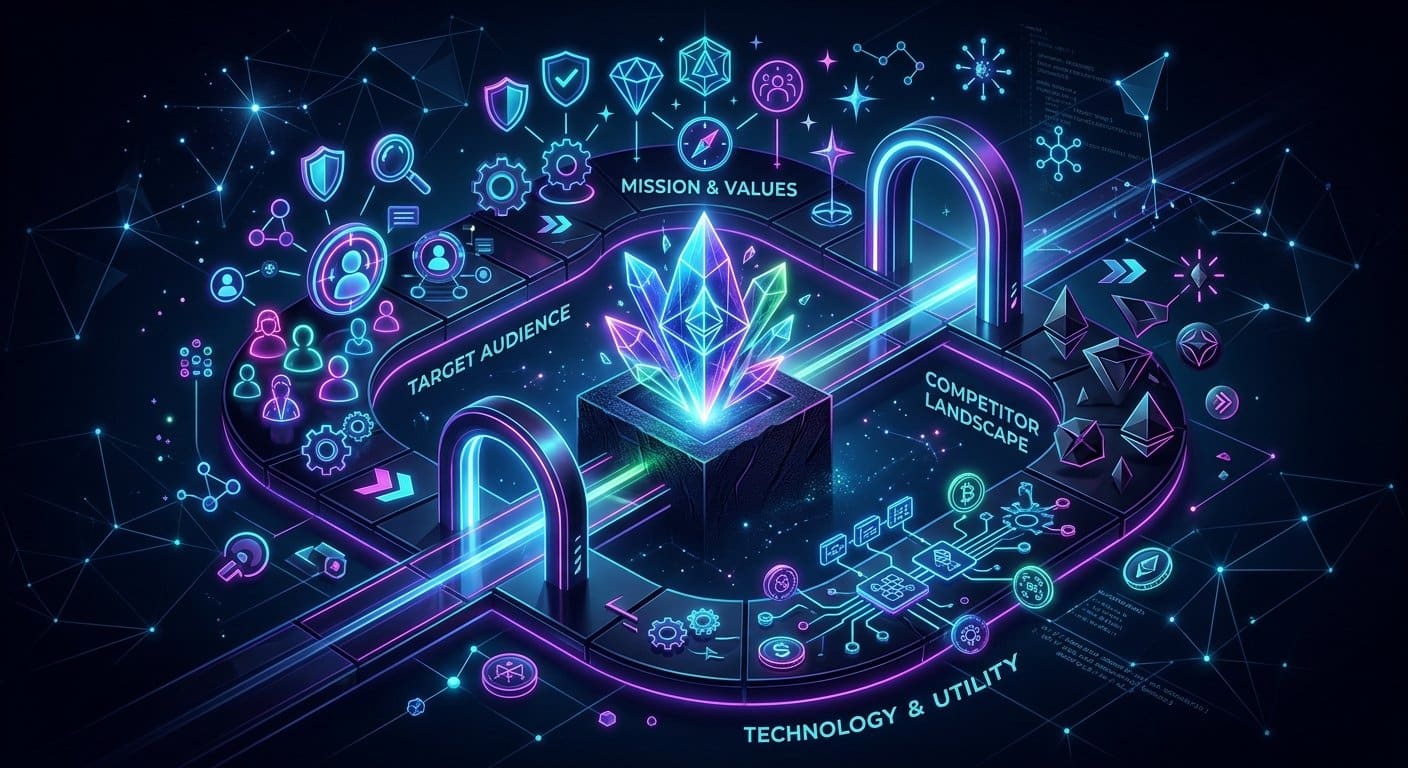
Not every project needs the same branding investment. A meme coin launching on Pump.fun operates under completely different constraints than a Layer 2 protocol seeking venture capital. Before comparing approaches, you need clarity on three factors that determine which path makes sense for your situation.
First, define your actual budget in dollar terms. “As much as it takes” isn’t a budget. Most legitimate branding work for crypto projects falls into three tiers: $500-$3,000 for basic freelancer packages, $8,000-$25,000 for mid-tier agency work, and $40,000-$150,000 for comprehensive brand strategy with ongoing support. If you have less than $500, your only realistic option is DIY until you can raise more capital.
Second, establish your hard launch deadline. Branding isn’t something you can rush effectively. Quality logo design takes 2-3 weeks minimum including revisions. Full brand identity systems require 6-8 weeks. If your token sale starts in two weeks and you have no visual assets, you’re forced into the DIY or rapid freelancer route regardless of budget.
Third, assess your team’s actual creative capabilities. Many technical founders overestimate their design skills. Can someone on your team create professional-looking mockups in Figma? Do you understand color theory, typography hierarchy, and visual brand systems? If the honest answer is no, attempting DIY branding wastes time you should spend on development or community building.
Once you have clear answers on budget, timeline, and internal capabilities, you can evaluate which approach actually fits your constraints rather than which one sounds most appealing in theory.
1. DIY Branding: When Founder Vision Meets Canva
The DIY approach means founders or team members create all brand assets using tools like Canva, Figma, or Adobe Creative Suite. This path works for specific project types but fails spectacularly for others. Understanding when DIY makes sense requires honest assessment of both your skills and your project’s positioning goals.
The Reality of DIY Crypto Branding
DIY branding costs almost nothing in direct expenses but consumes significant time. Expect to spend 40-80 hours learning tools, iterating designs, and creating a basic visual system. For founders billing their time at standard developer or executive rates, that’s $4,000-$16,000 in opportunity cost even though the out-of-pocket expense is zero.
The quality ceiling for DIY work depends entirely on team talent. Some founders have genuine design skills and produce work that rivals professional output. Most don’t. The typical DIY crypto brand includes a Canva logo using stock shapes, a color palette pulled from Coolors.co, and social media templates that look serviceable but generic.
Here’s what DIY actually delivers in most cases:
- Basic logo mark (usually geometric or abstract)
- 2-3 brand colors without strategic color psychology
- Standard web fonts (often Google Fonts)
- Social media post templates
- Simple website header graphics
What DIY typically can’t deliver: cohesive brand strategy, sophisticated illustration systems, custom typography, professional motion graphics, or multi-platform visual consistency.
Best DIY Tools for Crypto Projects
If you’re committed to DIY, use professional-grade tools even as a beginner. Canva works for social media templates but fails for serious logo work. Figma provides the best balance of capability and learning curve, with extensive free resources and a massive plugin ecosystem.
For logo creation, Figma combined with shape-building plugins gives you professional vector output. For color systems, use Coolors or Adobe Color to generate palettes, but validate them for accessibility using WebAIM’s contrast checker. For typography, pair fonts using established combinations from Fontpair or Typ.io rather than making random selections.
The hidden challenge in DIY isn’t creating individual assets. It’s maintaining consistency across platforms. One founder creates Twitter headers, another designs Discord graphics, and the result looks like three different projects. Solve this by creating a simple brand guidelines document upfront, even if it’s just a Notion page defining exact color codes, font choices, and logo spacing rules.
When DIY Branding Actually Works
DIY makes sense in four specific scenarios. First, pre-seed meme coins where the entire positioning strategy depends on looking grassroots and community-built. Professional branding would actually hurt credibility in this niche. Second, developer tools or infrastructure projects where the target audience values technical substance over visual polish. Third, concept-stage projects seeking initial feedback before formal launch. Fourth, internal team projects or experiments not intended for public launch.
DIY fails for projects seeking institutional investment, launching on centralized exchanges, competing in crowded DeFi categories, or targeting mainstream users unfamiliar with crypto. In these contexts, amateur branding signals risk and lack of professionalism.
Best for: Pre-revenue meme coins, developer-focused infrastructure tools, concept validation projects, and teams with genuine in-house design talent.
2. Freelancer Networks: The Fiverr to Upwork Spectrum
Hiring individual freelance designers through platforms like Fiverr, Upwork, or Dribbble sits between DIY and agency work. This approach offers professional execution at lower costs but requires active project management and carries significant quality risk. Success depends entirely on vetting freelancers effectively and knowing what to request.
Cost and Timeline Expectations
Freelancer costs vary wildly based on platform, designer experience, and package scope. Fiverr logo packages start at $50-$150 but usually deliver template-based work with minimal customization. Mid-tier Upwork designers charge $500-$2,000 for logo plus basic brand identity. High-end freelancers on Dribbble or Contra command $3,000-$8,000 for comprehensive brand systems.
Timeline depends on the freelancer’s workload and your feedback speed. Basic logo work takes 1-3 weeks. Full brand identity including color systems, typography, and templates requires 3-6 weeks. Rush delivery costs 30-50% more and often sacrifices quality.
According to Investopedia’s cryptocurrency development research, most projects underestimate the revision cycles needed when working with freelancers. Budget at least three revision rounds, and expect each round to take 3-5 business days depending on the designer’s responsiveness.
The Three-Tier Freelancer Framework
Not all freelancers deliver equivalent value. Understanding the three tiers helps you match budget to realistic expectations and avoid the trap of hiring cheap designers then redoing everything later.
Tier 1: Template Executors ($50-$300)
These freelancers use pre-made templates with minor customization. They work fast but deliver generic results. You’ll get a logo that technically works but looks similar to dozens of other projects. Appropriate only for throwaway projects or initial concept testing.
Tier 2: Skilled Contractors ($500-$2,500)
The sweet spot for most early-stage crypto projects. These designers create custom work from scratch, understand composition and color theory, and deliver professional files. They won’t provide brand strategy or positioning advice, but they execute specific briefs competently.
Tier 3: Brand Specialists ($3,000-$8,000)
Experienced designers who understand crypto specifically and provide strategic input beyond execution. They ask about your positioning, analyze competitor brands, and suggest visual directions you haven’t considered. Worth the premium if you lack internal marketing expertise.
Vetting Freelancers Effectively
Portfolio review is mandatory but insufficient. Many freelancers showcase work they didn’t actually create or heavily art-directed by clients. Ask these specific questions during vetting:
- Request work-in-progress files from portfolio projects to verify they created them
- Ask about their crypto experience specifically (general designers miss critical context)
- Test communication quality, response speed matters when you need quick revisions
- Check if they deliver layered source files or only final exports
- Verify they understand blockchain terminology and Web3 positioning
The fastest way to identify weak freelancers is asking them to critique your competitors’ branding. Strong designers immediately articulate what works and what doesn’t. Weak ones give vague positive feedback about everything.
Managing the Freelancer Process
You need someone on your team acting as creative director even when outsourcing to freelancers. Designers execute your vision but shouldn’t define your brand strategy. If you tell a freelancer “make something cool,” you get whatever style they personally prefer, which might not align with your market positioning.
Create a simple creative brief before soliciting proposals. Include your project type, target audience, competitor references (what to emulate and what to avoid), and any specific visual requirements. This document cuts down revision cycles significantly because the designer starts with clear direction.
For crypto projects, specify technical requirements upfront: Will you need SVG files for website integration? PNG files with transparent backgrounds? Source files in Figma or Adobe Illustrator format? Define deliverables explicitly in your initial agreement to avoid scope disputes later.
Best for: Projects with $1,000-$5,000 branding budgets, teams comfortable managing creative contractors, and launches where you need professional quality but can’t justify full agency costs.
3. Full-Service Agencies: The Premium Approach
Crypto marketing agencies provide end-to-end brand development including strategy, design, and often ongoing execution support. This path costs significantly more but delivers cohesive results and typically includes strategic positioning work beyond just visual design. Understanding what separates good agencies from expensive disappointments matters more than understanding what agencies do generally.
Agency Cost Reality Check
Legitimate crypto branding agencies charge $8,000-$25,000 for initial brand identity work and $40,000-$150,000 for comprehensive brand strategy with launch support. Prices below $5,000 usually indicate you’re working with a freelancer calling themselves an agency, not an actual team with diverse specialists.
Agency timelines run longer than freelancer work because they include discovery phases and stakeholder alignment. Expect 6-10 weeks for brand identity work and 12-16 weeks for full brand strategy including messaging frameworks and market positioning. This timeline assumes efficient decision-making on your end. Indecisive clients can extend agency projects by months.
What you get for agency rates: dedicated account management, multiple design concepts to choose from, comprehensive brand guidelines documentation, file formats for every use case, and often some level of revision rights for 3-6 months post-launch. The best agencies also provide competitive analysis and positioning strategy rather than jumping straight to visual execution.
The Agency Evaluation Matrix
Most crypto projects choose agencies based on portfolio attractiveness and price. Better evaluation looks at process, specialization, and outcome alignment. Use this framework when comparing agency options:
| Evaluation Factor | What to Look For | Red Flags |
|---|---|---|
| Crypto Specialization | Portfolio of 10+ crypto projects, understands DeFi/L1/L2 distinctions | Generic marketing agency adding “blockchain” to service list |
| Process Transparency | Clear phases with deliverables defined, revision policies stated upfront | Vague scope, unlimited revisions promised, no timeline milestones |
| Team Structure | Named strategist, designer, and account manager assigned to your project | Unclear who you’ll work with, rotating team members, outsourced execution |
| Strategic Depth | Discovery phase includes competitor analysis and positioning workshops | Jump straight to design concepts without understanding your market context |
| Deliverables Clarity | Itemized list of files, formats, and usage rights you’ll receive | Vague promises of “everything you need” without specifics |
The most common agency mistake is hiring based on impressive past work without verifying the team composition. That beautiful portfolio case study might have been created by a senior designer who left the agency six months ago. Always ask who specifically will work on your project and review their individual portfolios.
When Agency Investment Makes Sense
Agencies provide maximum value in four situations. First, projects raising institutional capital where brand perception directly impacts funding success. Second, protocol launches competing in crowded categories where differentiation determines market share. Third, projects with complex positioning that spans multiple product lines or target audiences. Fourth, teams lacking any marketing expertise internally who need strategic guidance beyond execution.
Agencies make less sense for projects in early concept stages, meme coins where grassroots aesthetics matter more than polish, or teams with strong internal creative direction who just need execution help. In these cases, you’re paying for strategy you don’t need or that conflicts with your positioning goals.
Working with a Best Crypto Marketing Agency often extends beyond just branding to include launch coordination, influencer outreach, and community building. If you need these additional services, bundling them with brand development at an agency typically costs less than hiring separate specialists for each function.
Best for: Well-funded projects seeking institutional credibility, complex protocols requiring sophisticated positioning, teams lacking internal marketing expertise, and launches where brand differentiation directly impacts competitive success.
4. Comparison Framework: Mapping Approaches to Project Needs
Choosing between DIY, freelancer, and agency approaches requires matching your constraints to realistic outcomes. This framework synthesizes the previous sections into an actionable decision matrix based on the factors that actually determine success in crypto project branding.
The Project-Approach Matching System
Your project characteristics should narrow your options before you consider cost. A DeFi lending protocol competing with Aave and Compound has fundamentally different branding requirements than a meme coin launching on Pump.fun. The table below maps project types to appropriate branding approaches:
| Project Type | DIY Viability | Freelancer Fit | Agency Necessity |
|---|---|---|---|
| Meme Coin (< $50K raise) | High – grassroots look expected | Medium – if you need polish | Low – overkill for this category |
| DeFi Protocol (VC-backed) | Very Low – credibility critical | Medium – works if experienced | High – competitive advantage |
| Layer 1/Layer 2 Chain | Very Low – enterprise sales risk | Low – complexity too high | Very High – positioning critical |
| DEX or Swap Protocol | Low – crowded category | High – good middle ground | Medium – depends on funding |
| Developer Tool/Infrastructure | Medium – audience values function | High – technical understanding key | Medium – if selling to enterprises |
This matrix assumes you’re evaluating approaches based on project success probability, not just minimizing costs. The cheapest option often costs more in the long run when you need to rebrand six months post-launch because initial execution was inadequate.
Budget Allocation Models
How you allocate your marketing budget between branding and other activities depends on your launch strategy. Projects planning significant influencer campaigns need to reserve budget for those activations. Projects relying on organic community growth can invest more heavily in upfront brand development.
Typical Budget Allocation by Approach
These figures represent median costs based on reviewing proposals from multiple providers. Your actual costs vary based on scope, urgency, and provider negotiating position. Projects willing to wait for designer availability often secure 15-25% discounts compared to rush requests.
Timeline Comparison Across Approaches
Speed requirements often eliminate certain approaches regardless of budget. If you’re launching in three weeks, agencies are off the table because their discovery and concept phases alone take longer than your entire timeline. Understanding realistic timelines prevents poor decisions driven by unrealistic expectations.
DIY branding takes 2-4 weeks if you’re learning tools from scratch and iterating designs. If someone on your team already has design skills, this compresses to 1-2 weeks. Freelancer work requires 1-3 weeks for basic logo packages and 3-6 weeks for comprehensive brand identity. Agency work demands 6-10 weeks for brand identity and 12-16 weeks for full brand strategy including positioning and messaging frameworks.
All these timelines assume efficient decision-making on your end. Every day you delay providing feedback adds a day to the project timeline. Teams that schedule weekly review sessions complete projects faster than teams that review work ad-hoc when founders have free time.
Should You Invest in Professional Branding?
✅ YES if:
- You’re raising institutional capital or seeking CEX listings
- You’re launching in a crowded category with strong competitors
- Your target audience includes mainstream users or enterprises
- You have marketing budget exceeding $10K total
- Your team lacks design or brand strategy expertise
❌ NO if:
- You’re testing a concept pre-launch with no funding
- You’re launching a meme coin where grassroots aesthetics matter
- You have in-house design talent that understands crypto
- Your total marketing budget is under $5K
- You’re targeting developer audiences who prioritize function over form
5. Essential Brand Elements Every Crypto Project Needs
Regardless of which execution approach you choose, certain brand elements are non-negotiable for crypto projects. Missing any of these components creates gaps that hurt your market perception and make consistent execution impossible. This section defines the minimum viable brand system for Web3 launches.
Visual Identity Core Components
Your visual brand system needs five foundational elements before you can execute marketing consistently. Missing even one creates problems that compound over time as you create more assets across more platforms.
Primary Logo Mark: The symbol that represents your project in app icons, social media avatars, and condensed spaces. This needs to work legibly at 16×16 pixels for favicons and scale up to billboard size without losing clarity. Most crypto projects use geometric abstractions or letterforms. Whatever you choose, it must be distinctive enough to recognize in a grid of 50 other crypto logos.
Full Wordmark: Your project name in a specific typographic treatment. This appears on your website header, documentation, and anywhere you need explicit name recognition. The wordmark should complement your logo mark but remain legible without it. Test your wordmark at both large display sizes and small mobile widths.
Color System: Primary, secondary, and accent colors defined with exact hex codes, RGB values, and print equivalents. Most crypto brands use 2-3 primary colors plus neutrals. According to Ethereum’s style guide, the most successful crypto color systems include specific guidance for different use cases: interface colors versus marketing colors versus community graphics.
Typography Hierarchy: Defined font families for headings, body text, and code blocks with specific size and weight combinations. Many crypto projects need three type categories: display fonts for marketing, readable fonts for documentation, and monospace fonts for technical content. Document exact sizes, weights, and line heights so different team members create consistent layouts.
Visual Style Direction: Guidelines for illustration, photography, and graphic elements. Will you use 3D renders, flat illustrations, photographic backgrounds, or abstract geometric patterns? This decision impacts everything from social media posts to landing page headers. Without clear direction, your brand looks inconsistent as different team members interpret the style differently.
Brand Strategy Documentation
Visual assets are worthless without strategic context explaining when and how to use them. Your brand documentation should answer every question team members have when creating new assets without requiring founder approval each time.
At minimum, document your positioning statement in one clear sentence: what your project does, who it serves, and what makes it different from competitors. For example, “A Layer 2 scaling solution that prioritizes developer experience over raw throughput for DeFi applications.”
Define your tone of voice across three dimensions: professionalism level (technical versus accessible), personality (serious versus playful), and communication style (direct versus conversational). These dimensions guide copywriting decisions across all channels. A DeFi protocol targeting institutions needs different tone than a meme coin community token.
Create usage guidelines for your logo: minimum size requirements, clear space around the mark, acceptable color variations, and explicit examples of incorrect usage. This prevents team members from distorting proportions, placing logos on clashing backgrounds, or creating unauthorized variations that fragment your brand consistency.
Platform-Specific Asset Templates
Crypto projects operate across more platforms than traditional businesses: Twitter/X, Telegram, Discord, Medium, your website, and often 5-10 other channels. Each platform has different technical requirements and audience expectations. Creating templates for common use cases dramatically improves execution speed and consistency.
Build templates for these high-frequency use cases: Twitter/X announcement posts, Telegram pinned messages, Discord server banners, Medium article headers, and product update graphics. Include your branding elements but leave space for unique content so everything doesn’t look identical. The goal is consistent branded presence, not robotic repetition.
For projects running influencer campaigns through a Meme Coin Marketing Agency or working with Twitter crypto influencers, create promotional asset packs that influencers can use without modifying your core brand elements. This maintains visual consistency even when external creators promote your project.
6. Execution Mistakes That Kill Crypto Brands
Most crypto project branding failures aren’t due to choosing the wrong approach or insufficient budget. They result from predictable execution mistakes that destroy even well-designed brand systems. Understanding these failure patterns helps you avoid them regardless of whether you go DIY, freelancer, or agency route.
The Iteration Death Spiral
The most common branding failure in Web3 is endless revision cycles that never reach launch. Teams spend months tweaking logo concepts, requesting “just one more variation,” and second-guessing color choices while competitors ship and capture market attention.
This happens when projects lack clear approval criteria upfront. Before starting design work, define what success looks like. Not vague statements like “professional and modern,” but specific criteria: “Recognizable in a 32×32 pixel favicon, works in single color, appeals to DeFi power users familiar with Aave and Compound.”
Set hard deadlines for brand decisions. If you’re choosing between three logo concepts, schedule a decision meeting, vote, and commit. The difference between your second and third choice logo option matters far less than launching with consistent branding three months earlier.
In reality, brand perfection is impossible. Every successful crypto brand you admire launched with flaws their team wanted to fix later. Uniswap’s original branding was decent but unremarkable. They iterated after gaining traction. Your brand needs to be good enough to not hurt credibility, not perfect enough to win design awards.
Platform Inconsistency Syndrome
Many crypto projects launch with beautiful website branding then completely abandon those standards on social media, community channels, and documentation. The website shows sophisticated 3D renders and elegant typography. The Telegram has Comic Sans text over random gradient backgrounds. The Discord uses different colors entirely.
This inconsistency happens when different team members handle different channels without central brand coordination. The developer creating documentation picks fonts they like. The community manager making Telegram graphics uses whatever Canva template looks cool. Nobody intentionally fragments the brand, but lack of coordination produces that outcome.
Solve this by designating one person as brand guardian responsible for reviewing all public-facing assets before publication. This doesn’t mean everything requires founder approval. It means someone with brand authority checks that new assets follow established guidelines. For small teams, this role takes 2-3 hours per week, not a full-time position.
Create a simple approval workflow: team member creates asset using templates, posts in designated Slack/Telegram channel for brand review, guardian approves or requests specific changes, asset ships. This workflow adds one day to execution but prevents months of accumulated inconsistency that eventually requires expensive rebranding.
The Copycat Credibility Problem
Copying successful crypto brands seems like a shortcut to credibility. If Aave uses purple and geometric shapes, surely using similar elements associates your DeFi protocol with their success, right? Wrong. Looking like a cheaper version of a successful competitor destroys credibility rather than building it.
The crypto market is sophisticated enough to recognize derivative branding instantly. When your visual identity closely resembles an established project, the immediate perception is “they couldn’t afford original branding” or “they have no unique positioning.” Both perceptions kill projects before they start.
Differentiation matters more than perfection in crowded categories. A distinctive brand with minor execution flaws beats a polished brand that looks generic. When working with designers, explicitly call out competitors to avoid, not just competitors to emulate. “We like Aave’s professionalism but need to look clearly different” gives better direction than “make us look professional like Aave.”
Overdesign Paralysis
The opposite mistake from shipping too early is overcomplicating your brand system with unnecessary elements. Some projects create elaborate illustration systems, custom icon sets, animated logo variations, and extensive brand guidelines before they have a single user. This perfectionism wastes resources on elements that don’t impact success.
Start with the minimum viable brand: logo, colors, typography, and basic templates. Launch. Learn what assets you actually need based on real execution. Then expand your brand system to fill those specific gaps. Most crypto projects discover they need strong social media graphics more than they need custom illustration systems or animated logos.
Ask yourself: does this brand element directly support an execution need we have this month? If not, defer it. You can always expand your brand system later. You can’t recover the months wasted perfecting brand elements nobody notices while competitors capture your market opportunity.
7. Scaling Your Brand System Post-Launch
Your initial crypto project branding guide gets you to launch, but brands evolve as projects grow. This section covers how to expand your brand system strategically as you add team members, enter new markets, and respond to community feedback without fragmenting the visual consistency you built initially.
When to Expand Your Brand System
Don’t expand your brand assets until execution gaps appear. Common expansion triggers include: hiring designers or marketers who need more guidance, launching new product lines that need visual distinction, entering new geographic markets with different aesthetic preferences, or scaling content production beyond what your template library supports.
The clearest sign you need brand expansion is team members consistently asking the same questions: “What font should I use for this?” “Do we have a template for that?” “What color scheme should this use?” These repeated questions indicate gaps in your brand documentation or asset library.
Expanding too early creates maintenance burden without value. Elaborate brand guidelines nobody references waste the time spent creating them. Expand your system in direct response to execution needs, not speculatively based on what comprehensive brand systems theoretically include.
Adding Team Members Without Fragmenting Brand
As your team grows from 3 founders to 15 people, maintaining brand consistency becomes harder. New team members lack the implicit brand understanding early team members developed through months of daily decisions. They need explicit documentation and templates to execute consistently.
Create role-specific brand guidelines rather than comprehensive documents everyone ignores. Your community manager needs social media templates and tone of voice guidance, not logo construction geometry. Your developer writing documentation needs typography specifications and code formatting standards, not color psychology theory.
Schedule quarterly brand audits where someone reviews all public-facing assets created in the past three months. Flag inconsistencies, identify gaps in your template library, and update guidelines based on real questions team members asked. This proactive maintenance prevents gradual brand drift that compounds over time.
Managing Brand Evolution Versus Consistency
Successful crypto brands evolve subtly over time without confusing their community through dramatic changes. The challenge is differentiating healthy evolution from destructive inconsistency. Evolution means your brand system expands to support new needs while maintaining core elements. Inconsistency means core elements themselves change frequently or different variations proliferate across platforms.
Protect your brand core ruthlessly: logo mark, primary colors, and typography choices should rarely change unless you’re executing a deliberate rebrand. Evolution happens in the expandable layers: illustration style, photography approach, motion graphics, and secondary elements. These can shift to reflect current design trends or audience preferences without disrupting brand recognition.
If you’re considering changes to core brand elements, test them with your community first. Projects that surprise their community with dramatic rebrand announcements typically face negative reactions regardless of whether the new design objectively improves the brand. Communities form emotional attachments to visual identities. Respect that by involving them in major changes.
Building Community Brand Advocacy
Your most successful brand amplification comes from community members creating content that references your visual identity. Meme creators, educational content producers, and fan artists all extend your brand reach when they incorporate your branding elements into their work.
Make this easy by providing community asset packs: logo files in common formats, official color codes, and usage guidelines that encourage creative freedom while maintaining core brand integrity. Projects that try to control all brand usage through restrictive guidelines stifle organic community promotion.
Create simple rules: community members can use logos and colors freely for non-commercial content, but commercial usage requires approval. This balances protecting your brand integrity with encouraging grassroots promotion. Most successful crypto communities have active meme economies where community-created content drives engagement better than official marketing.
Feature outstanding community-created branded content in your official channels. This recognition incentivizes quality community content creation and shows you value creative community contributions. The pattern we see is projects with strong community brand advocacy grow faster than projects relying solely on official marketing efforts, regardless of marketing budget size.
Frequently Asked Questions
How much should a crypto startup spend on branding?
Allocate 10-20% of your total marketing budget to initial brand development, with exact amounts depending on your category and funding stage. A meme coin with $20K marketing budget might spend $2K-$3K on branding. A VC-backed DeFi protocol with $200K marketing budget should invest $30K-$50K in comprehensive brand strategy. Projects planning significant Crypto PR Agency campaigns or influencer activations need strong branding first since those channels amplify your brand perception.
Can you successfully launch a crypto project with DIY branding?
Yes, if your project type aligns with grassroots aesthetics or your team includes genuine design talent. Meme coins and developer tools often succeed with DIY branding because their audiences value authenticity over polish. However, projects seeking institutional investment, CEX listings, or competing in crowded DeFi categories typically fail with amateur branding because visual credibility impacts trust perception in those contexts. Be honest about your team’s actual creative capabilities before committing to DIY.
What’s the biggest branding mistake crypto projects make?
Launching with placeholder assets “temporarily” and never upgrading. Projects underestimate how quickly initial brand impressions become permanent in community perception. Teams think they can rebrand after gaining traction, but discover their community has already formed strong associations with the original amateur aesthetic. Rebranding existing projects costs 3-5x more than launching properly initially because you’re fighting established perceptions, not building new ones.
How long does professional crypto branding take?
Basic brand identity through freelancers requires 3-6 weeks including revisions. Agency brand strategy projects take 8-12 weeks including discovery phases and stakeholder alignment. DIY branding takes 2-4 weeks if learning tools from scratch. All timelines assume efficient decision-making on your end. Every day you delay providing feedback adds a day to completion. Projects that schedule weekly review sessions complete branding 30-40% faster than teams that review work ad-hoc.
Should crypto projects rebrand after launch if initial branding was weak?
Only if your current branding actively hurts credibility or you’re pivoting to a different market segment. Rebranding carries significant costs beyond design work: updating all platforms, notifying community, updating documentation, and fighting established perception. Many projects would gain more value investing those resources in marketing execution with existing branding than rebranding. Exceptions: if you’re seeking institutional partnerships but have meme-quality branding, if you’re expanding from retail to enterprise markets, or if your brand closely resembles a competitor causing confusion.
Conclusion
The crypto project branding guide decision comes down to matching your constraints to realistic outcomes. DIY works for specific project types where grassroots aesthetics matter or you have genuine design talent internally. Freelancers provide the best value for mid-budget projects comfortable managing creative contractors. Agencies deliver comprehensive strategy and execution for well-funded projects where brand differentiation determines competitive success.
What actually matters isn’t which approach you choose but executing that approach without the common mistakes that kill crypto brands: endless iteration cycles, platform inconsistency, copycat positioning, or overdesign paralysis. Projects that launch with good-enough consistent branding beat projects that endlessly refine perfect branding but never ship.
Start by defining your non-negotiable constraints: budget in specific dollar amounts, hard launch deadline, and honest assessment of internal creative capabilities. These constraints eliminate inappropriate options before you waste time evaluating them. Then focus on execution quality within your chosen approach rather than second-guessing the approach itself.
Your brand system should grow with your project, not ahead of it. Launch with minimum viable branding: logo, colors, typography, and basic templates. Expand strategically as execution gaps appear based on real needs, not speculative additions. Version your guidelines, protect core elements while allowing peripheral evolution, and involve your community in major changes.
The projects succeeding in crypto today aren’t necessarily those with the most sophisticated branding. They’re projects that understand their positioning, execute consistently across platforms, and maintain visual distinction from competitors. Professional design helps but can’t compensate for unclear strategy or inconsistent execution.
If you need expert support building a comprehensive brand system connected to broader marketing execution, working with specialists who understand Web3-specific requirements accelerates results. At CryptoPromo, we’ve helped projects across every category build distinctive brands that support their positioning goals and connect to coordinated launch campaigns. Whether you need strategic positioning work, comprehensive brand identity, or execution support across multiple channels, our team brings the crypto-specific experience that generic agencies lack. Contact CryptoPromo to discuss how professional branding fits into your overall launch strategy and timeline.


