

Last updated: June 2026
Your DeFi protocol just launched with best-in-class smart contracts audited by three firms. The APY is competitive. The UI looks clean. You pushed the announcement across Twitter, spent $15,000 on influencer campaigns, and secured coverage in two crypto publications. Week one brings 2,400 wallet connections. Week two? Just 180. By week four, you’re looking at single-digit daily active users.
The disconnect isn’t your product. It’s the chasm between Web2 expectations and Web3 reality. Most potential users hit your landing page, see “Connect Wallet,” and immediately bounce. They don’t have a wallet. They don’t know what gas fees are. They’re not sure if connecting their wallet means you can drain their funds. According to Forbes, the user experience gap remains the primary barrier preventing mainstream crypto adoption, with technical complexity driving abandonment rates above 70% for first-time users.
The reality is that effective web3 user onboarding tactics need to meet users where they are, not where we wish they’d be. Platforms like Messari track crypto market intelligence across thousands of projects, and the pattern is clear: protocols that invest in thoughtful onboarding sequences retain 3-5x more users in the first 30 days than those that dump newcomers straight into wallet management and transaction signing.
This guide breaks down nine proven web3 user onboarding tactics that bridge the Web2-to-Web3 gap without compromising decentralization or security. Each tactic includes implementation details, real platform examples, and the specific friction points they solve.
Key Takeaways
- Progressive decentralization lets users start with familiar login methods before transitioning to wallet custody
- Educational content embedded in the user flow reduces support tickets by 40-60% and increases completion rates
- Gasless transactions and meta-transactions remove the immediate need for users to acquire native tokens
- Gamified onboarding with achievements and milestones increases 7-day retention by 2-4x across DeFi protocols
- Multi-platform entry points (email, social login, wallet) capture different user segments with varying crypto literacy levels
Understanding the Web2-to-Web3 Friction Points

Before implementing web3 user onboarding tactics, you need to map exactly where users drop off. The friction isn’t a single wall, it’s a series of speed bumps that compound. Each new concept (wallet, seed phrase, gas, network selection, token approval) adds cognitive load.
In practice, most projects see abandonment at five predictable points: wallet installation (45-55% drop-off), seed phrase backup (30-40% skip this step entirely), acquiring native tokens for gas (60-70% abandon here), understanding transaction confirmations, and navigating network switching. Each represents a conversion leak that traditional Web2 users simply won’t tolerate.
Problem: New users arrive at your DApp expecting a “Sign Up” button and instead face wallet connector modals listing MetaMask, WalletConnect, Coinbase Wallet, and eight other options they’ve never heard of. Conversion rate from landing page to wallet connection sits around 8-12% for cold traffic.
Solution: Implement progressive disclosure with a single primary CTA (“Get Started”) that branches based on user state detection. Check for existing wallet extensions first. If detected, show a simplified one-click connection. If no wallet is present, offer a simplified email-based account creation that generates a non-custodial wallet in the background, delaying the educational burden until after the user has experienced value. Platforms like Magic and Web3Auth enable this pattern, creating wallets tied to social logins or email addresses without forcing users to immediately manage private keys.
Problem: Users who successfully connect wallets immediately face gas fees. They don’t own ETH, MATIC, or whatever your protocol’s native token is. The UX loop of “go to exchange, create account, KYC, buy tokens, bridge to correct network, return to DApp” has a completion rate under 5% for new users.
Solution: Deploy gasless transactions using meta-transactions or account abstraction. Projects like Biconomy and Gelato enable relayer infrastructure where your protocol sponsors gas fees for specific user actions. Set clear limits (e.g., first 10 transactions free, or gas sponsorship up to $5 equivalent) to prevent abuse while removing the immediate barrier. Uniswap’s wallet implements this pattern, allowing users to swap tokens without holding native gas tokens for their first several transactions.
Problem: Seed phrase backup creates immediate user anxiety. Telling someone “write down these 12 words or lose all your money forever” on their first interaction with your product destroys trust and creates decision paralysis. Recovery phrase backup completion rates average 25-35% when required immediately after wallet creation.
Solution: Defer seed phrase management until after users have completed a valuable action within your protocol. Use social recovery mechanisms (Argent, Safe) or threshold signatures (Lit Protocol) that distribute key management across multiple methods: email recovery, social account verification, and optional traditional seed phrases for advanced users. Present backup as a progressive feature unlock rather than a mandatory immediate requirement. The pattern: complete first transaction → unlock feature X → secure your account for full access → backup now enables advanced features.
| Friction Point | Traditional Approach | Optimized Approach | Impact on Conversion |
|---|---|---|---|
| Initial Access | Connect MetaMask | Email/Social + Embedded Wallet | +35-50% first session |
| Gas Fees | User must acquire tokens | Sponsored transactions/meta-tx | +60-80% task completion |
| Seed Phrase | Immediate backup required | Progressive reveal + social recovery | +40-55% account security setup |
| Network Switching | Manual chain selection | Auto-detect + one-click switch prompt | +25-35% correct network use |
| Transaction Confirmation | Raw transaction data | Human-readable explanations + simulation | +20-30% approval rate |
1. Social Login Integration with Non-Custodial Wallet Generation
The first web3 user onboarding tactic that actually moves conversion numbers is social login paired with automatic wallet creation. This isn’t about going custodial or sacrificing decentralization. It’s about hiding blockchain complexity behind familiar authentication patterns while maintaining user sovereignty.
Services like Web3Auth, Magic, Privy, and Dynamic enable users to authenticate with Google, Twitter, Discord, or email addresses. Behind the scenes, these systems generate legitimate Ethereum-compatible wallets using threshold cryptography or MPC (multi-party computation). Users get immediate access without downloading browser extensions or managing private keys from day one.
The implementation pattern: User clicks “Continue with Google” → OAuth flow completes → system generates wallet address tied to that Google account → user is immediately inside your DApp with a functional wallet → education about what just happened occurs progressively as they use features.
Implementation Considerations
Not all social login solutions are equal. Web3Auth uses Shamir Secret Sharing to split private keys across multiple nodes, requiring threshold reconstruction for transactions. Magic uses delegated key management with AWS KMS infrastructure. Privy and Dynamic offer hybrid approaches with optional export to self-custody wallets.
Your choice depends on your user base. Protocols targeting DeFi natives might offer social login as an optional entry point alongside traditional wallet connection. Projects going after mainstream audiences should make social login the primary path, relegating “Connect Wallet” to advanced users who specifically want to use their existing MetaMask setup.
Technical detail: Most social login providers charge $0.05-$0.20 per monthly active wallet. At scale (10,000+ MAW), negotiate volume pricing or consider self-hosting solutions like Magic’s enterprise tier which offers white-label deployment on your infrastructure.
Progressive Custody Transfer
The advanced move is treating wallet custody as a spectrum rather than a binary choice. Start users on fully managed social login wallets. After they’ve transacted 5-10 times and demonstrated engagement, surface progressive self-custody options:
- Export private key to MetaMask or other wallet (immediately graduates them to full self-custody)
- Enable hardware wallet signing (Ledger/Trezor integration for high-value accounts)
- Set up multi-sig or social recovery guardians
- Download seed phrase backup as optional security upgrade
This pattern respects user sophistication levels. Crypto natives can immediately export and take full custody. Mainstream users can operate comfortably within managed parameters until they’re ready for more responsibility.
2. Gasless Transactions and Meta-Transaction Relayers
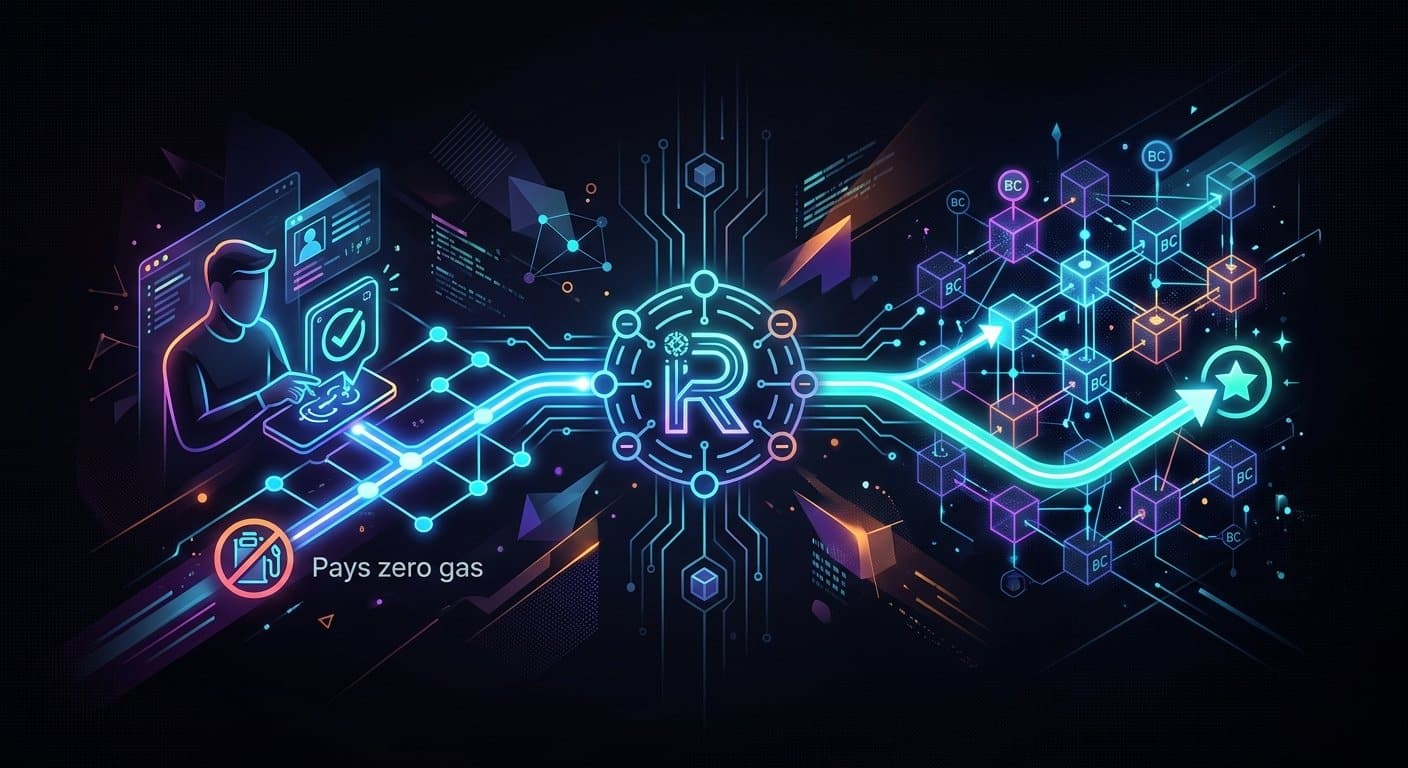
Gas fees represent the single largest drop-off point in web3 user onboarding tactics. New users don’t have native tokens. Acquiring them requires exchange accounts, KYC verification, and navigating bridging interfaces. The friction is insurmountable for most first-time visitors.
Meta-transactions solve this by allowing protocols to sponsor user gas costs. The user signs a message (gas-free) indicating intent to perform an action. A relayer service picks up that signature, wraps it in an actual blockchain transaction, pays the gas, and submits it on-chain. From the user’s perspective, actions are free and instant.
Biconomy and Gelato are the primary infrastructure providers here. Implementation requires integrating their SDK, defining which contract methods qualify for gas sponsorship, and setting budget limits to prevent abuse. Typical costs run $0.02-$0.15 per sponsored transaction depending on network and complexity.
Economic Models for Gas Sponsorship
You can’t sponsor gas forever for everyone. Smart protocols structure sponsorship as a growth expense with clear ROI targets:
Tiered Sponsorship Model:
Gas Sponsorship Budget Allocation
New users get their first 3-5 transactions completely free. This covers wallet creation, profile setup, and initial engagement. After that, introduce partial sponsorship where users pay a percentage (30-50%) in stablecoins while the protocol covers the remainder. Finally, graduate users to full self-payment once they’ve demonstrated sustained engagement or reached value thresholds.
Alternative approach: Sponsor gas only for specific high-value actions that drive protocol growth. Examples include staking tokens, providing liquidity, referring new users, or participating in governance votes. Low-value actions (updating profile pictures, posting comments) require users to have gas tokens.
Account Abstraction as Next Evolution
ERC-4337 account abstraction takes meta-transactions further by making every user account a smart contract rather than an externally owned account. This unlocks sophisticated UX patterns: batch transactions (approve + swap in one click), session keys (one-time permission for limited actions), and customizable gas payment (pay gas in USDC instead of ETH).
Safe and Stackup are leading implementations. Adoption is still early (June 2026), but protocols launching new products should seriously consider account abstraction as the foundation rather than retrofitting later. The onboarding benefits compound over time as more infrastructure supports AA wallets natively.
3. In-App Educational Tooltips and Contextual Help
Education can’t be a separate documentation site that users never visit. Effective web3 user onboarding tactics embed learning directly into the user flow, surfacing explanations exactly when concepts become relevant.
When a user encounters their first transaction approval, that’s the moment to explain what “approve” means in the context of token permissions. When they see a gas estimate, that’s when you explain what gas is and why it fluctuates. Contextual education reduces support tickets and increases task completion by showing users what they need to know precisely when they need to know it.
Tools like Appcues, Pendo, or custom React component libraries enable you to build tooltip flows that trigger based on user actions. The pattern: detect first-time event → pause the flow → display explanation with visuals → offer “Learn More” link for details → allow user to proceed or skip.
Designing Effective Crypto Education Content
Bad crypto education sounds like this: “Gas is a unit of computational effort required to execute operations on the Ethereum Virtual Machine. It is denominated in gwei, which is 0.000000001 ETH.”
Good crypto education sounds like this: “Gas is like a service fee. It pays network computers to process your transaction. Busy times cost more, like surge pricing for rides. You can wait for lower fees or pay extra to go faster.”
Write at an 8th-grade reading level. Use analogies to familiar Web2 concepts. Show visual examples with screenshots or animations. Most importantly, keep explanations under 50 words for tooltips and under 200 words for expanded help articles. According to Ethereum.org design guidelines, users abandon educational content after 15-20 seconds if it doesn’t immediately answer their specific question.
Interactive Learning Modules
Level up from passive tooltips to interactive tutorials where users complete actual blockchain actions in a safe sandbox environment. Rabbithole and Layer3 pioneered this model with on-chain quests that reward users for completing specific DeFi actions.
The framework: Create testnet or mainnet sandbox accounts with pre-funded tokens. Guide users through swapping, staking, or other core actions with real transaction feedback but no financial risk. Upon completion, users receive NFT credentials or token rewards that transfer to their mainnet accounts.
This works because it’s learning by doing rather than reading. Users build muscle memory for transaction signing, gas confirmation, and protocol navigation before committing real capital. Completion rates for interactive tutorials run 60-70% compared to 15-25% for documentation reading.
4. Gamified Onboarding Quests and Achievement Systems
Web3 protocols that treat onboarding as a game rather than a checklist see dramatically higher completion rates. Gamification applies proven behavioral psychology: clear progression paths, visible achievements, and dopamine rewards for completing tasks.
The structure: Break onboarding into 8-12 discrete quests that guide users through core features. “Create your profile” → “Make your first swap” → “Add liquidity to a pool” → “Vote on a governance proposal” → “Refer a friend.” Each quest completion triggers visual celebrations (animations, sound effects) and awards points, NFT badges, or token rewards.
Galxe and QuestN provide turn-key infrastructure for on-chain quest systems. For custom implementations, consider smart contract badge systems using ERC-1155 (efficient for distributing many achievement types) or soulbound tokens (non-transferable credentials).
Quest Design Principles
Good quests follow the “J-curve” difficulty pattern: start easy, ramp gradually, create one significant challenge, then ease off. First quest should be completable in under 30 seconds with zero prior knowledge. Quest 5-6 should require actual learning and effort. Final quests can assume competency and introduce advanced features.
Bad quest design requires users to leave your platform (go follow us on Twitter, join our Discord) before they’ve experienced core product value. These external CTAs have completion rates under 20% and train users that your actual product is boring compared to social media. Save community quests for after users have completed 3-4 in-app value demonstrations.
Social Proof Within Quest Systems
Display real-time quest completion stats: “12,483 users completed this quest” or “Top 5% completion time.” Social proof triggers competitive instincts and validates that effort is worthwhile. Leaderboards showing top performers (by completion speed, total quests, referrals) create aspirational models for new users.
Psychological trigger: People want to be part of groups that others value. Showing that thousands completed a quest signals it’s achievable and socially validated. This works particularly well for crypto audiences who already self-select for competitive, achievement-oriented behavior.
5. Progressive Feature Unlocking and Permission Scoping
One critical error in web3 user onboarding tactics is exposing full product complexity immediately. New users see advanced trading interfaces, governance forums, complex staking options, and liquidity management tools all at once. The cognitive overload triggers immediate bounce.
Progressive disclosure hides advanced features until users demonstrate readiness. Start with a simplified interface showing only core functionality. As users complete actions and gain experience, unlock additional features with celebratory “You’ve unlocked Advanced Trading” notifications.
This mirrors video game progression systems: new players start with basic moves and unlock special abilities as they level up. The pattern works because it creates a sense of growth and mastery rather than confusion and inadequacy.
Implementation via User Segmentation
Track user sophistication through observable behaviors: wallet age (on-chain data), transaction history, protocol-specific engagement depth, and completion of educational milestones. Use this to dynamically adjust interface complexity.
Beginner Mode: Wallet less than 30 days old, fewer than 10 total on-chain transactions. Show simplified interfaces, pre-set options, educational tooltips on every interaction, restricted access to high-risk features.
Intermediate Mode: 30-180 day wallet age, 10-100 transactions. Unlock customization options, manual slippage/gas settings, access to advanced order types, reduced educational prompts.
Advanced Mode: 180+ day wallet, 100+ transactions, or manual toggle by user. Full feature access, minimal UI guardrails, raw transaction data visibility, expert-level tools.
Allow manual override. Crypto natives hate being treated like beginners. Include a settings toggle that lets experienced users immediately switch to advanced mode, bypassing progressive unlocks.
Permission Scoping for Smart Contract Interactions
Token approvals represent a major security concern and UX friction point. Traditional pattern: user must approve unlimited token spending before any swap. This creates two problems: security risk (malicious contracts could drain approved tokens) and confusion (why am I signing two transactions for one swap?).
Better pattern: Request exact approval amounts for specific transactions, or implement session-based approvals that expire after set time periods. Permit2 (by Uniswap) enables batch approvals and signature-based transfers that reduce approval friction while maintaining security.
Explain approvals in human language: “This allows the swap contract to move 100 USDC from your wallet to complete your trade. The contract cannot access more than this amount.” Visual indicators showing exactly what permissions are being granted build trust and understanding.
6. Multi-Entry Point Architecture (Email, Social, Wallet)
Different user segments have different comfort levels with crypto concepts. One-size-fits-all onboarding misses opportunities to capture users at various sophistication levels. Effective web3 user onboarding tactics provide multiple entry paths that converge on the same protocol functionality.
The three-door architecture:
Door One – Email/Social Login: Targets crypto-curious Web2 users. No wallet required upfront. Generates embedded wallet automatically. Emphasizes familiar authentication. Landing page copy: “Get started with just your email.”
Door Two – Existing Wallet Connection: Targets crypto natives who already hold assets and prefer self-custody. Direct wallet connector modal. Supports MetaMask, WalletConnect, Coinbase Wallet, Ledger. Landing page copy: “Connect your wallet.”
Door Three – Phone/SMS Verification: Targets users in regions where social login is less common or mobile-first access is predominant. SMS-based wallet creation using services like SMSto or custom Twilio implementations. Landing page copy: “Sign up with your phone number.”
All three paths lead to the same underlying wallet infrastructure and protocol access. The difference is purely front-end authentication and initial wallet creation method. This flexibility increases addressable audience by 3-4x compared to wallet-only approaches.
Geographic and Demographic Considerations
Entry point preferences vary significantly by market. According to research from ConsenSys, North American and European users show 65-70% preference for email/social login when new to crypto, while Asian markets show 55-60% preference for mobile phone authentication due to different digital identity norms.
Age demographics matter too. Users over 35 strongly prefer email-based authentication (familiar, professionally associated). Users under 25 gravitate toward social login (Discord, Twitter, TikTok) as primary digital identity. Don’t guess, instrument your analytics to see which entry points your specific audience actually uses.
Conversion Funnel Optimization by Entry Method
Track completion rates and LTV by entry point. Some patterns we observe: social login users often show higher initial engagement but lower long-term retention. Wallet-first users show lower conversion rates but higher average transaction values and longer retention windows. Email users tend to fall in the middle on both metrics.
Use this data to optimize growth spend. If wallet-connected users have 3x higher LTV but 50% lower conversion rate, you can profitably spend more on acquisition for that segment. If social login users have high churn, focus retention efforts specifically on that cohort through targeted education and engagement campaigns.
7. Fiat On-Ramps with Embedded Purchase Flows
New users hitting “Insufficient Balance” errors immediately after onboarding represents a massive conversion leak. They’ve overcome wallet creation and initial setup, but lack tokens to actually use your protocol. Sending them to external exchanges creates 5-8 additional steps and 85%+ abandonment.
Embedded fiat on-ramps solve this by allowing users to purchase crypto directly within your interface using credit cards, debit cards, or bank transfers. Services like MoonPay, Ramp, Transak, and Wyre provide widget integrations that handle compliance, payment processing, and token delivery.
Implementation requires: selecting an on-ramp provider, integrating their SDK or iframe widget, defining which tokens users can purchase, and setting up revenue share agreements (providers typically charge 1-5% transaction fees and often offer revenue splits to integrating platforms).
Strategic On-Ramp Positioning
Don’t hide the purchase option in settings. Surface it contextually when users need tokens. Patterns that work:
- Detect zero balance state → show banner: “Add funds to get started” with direct CTA to purchase flow
- User attempts action requiring gas → transaction fails → immediate prompt: “You need ETH for gas. Buy now?”
- User wants to swap but has no swappable assets → pre-populate purchase widget with suggested amounts
Pre-fill sensible defaults. If users need gas to complete actions, suggest purchasing $20-$50 of ETH (enough for 20-50 transactions at current rates). If they’re onboarding to a staking protocol, suggest amounts that meet minimum stake requirements plus gas buffer.
Regulatory and Geographic Limitations
Fiat on-ramps don’t work universally. MoonPay and similar services support 30-50 countries with varying token availability. Users in restricted regions face dead-end experiences if on-ramp widgets are their only option.
Solution: Implement geo-detection and show appropriate alternatives. For users in on-ramp supported regions, show direct purchase options. For others, display guides for peer-to-peer exchanges, crypto ATMs, or specific regional solutions like Mercado Bitcoin (Latin America) or Paybis (broader emerging markets).
Never assume global availability of any specific service. Build fallback paths and regional customization into your onboarding architecture from day one.
8. Transaction Simulation and Preview Interfaces
Raw transaction data in wallet pop-ups terrifies new users. Hexadecimal addresses, wei denominations, and function signatures look like malware to anyone without blockchain literacy. One of the most overlooked web3 user onboarding tactics is making transaction consequences crystal clear before users sign anything.
Transaction simulation shows users exactly what will happen if they approve a transaction: which tokens will leave their wallet, which they’ll receive, what balances will look like after completion, and estimated time to finalization. This transforms signing from a leap of faith into an informed decision.
Tenderly and Blocknative offer transaction simulation APIs that can be integrated into custom interfaces. For DeFi protocols, you can build custom preview screens that decode your specific contract interactions into human-readable summaries.
Building Effective Preview Screens
Show before/after balance states with clear visual differentiation. Example swap preview:
Before:
USDC Balance: 1,000
ETH Balance: 0.5
After:
USDC Balance: 500 (-500)
ETH Balance: 0.8 (+0.3)
Gas Cost: ~$3.50
Include estimated dollar values for all tokens to give users reference points they understand. Many crypto newcomers think in fiat terms and need USD equivalent displays to assess whether transaction amounts make sense.
Add risk indicators for unusual transactions: “Warning: This transaction will give the contract permission to spend all your USDC” in red text with clear explanation of implications. Security-conscious users appreciate explicit callouts of high-permission transactions.
Failed Transaction Prevention
Simulate transactions before users sign to detect likely failures. Common failure states: insufficient gas, slippage too low for volatile markets, incorrect token approvals, attempting to send tokens to wrong contract types.
When simulation detects probable failure, block the transaction and explain why: “This swap will likely fail. The price moved 5.2% since you initiated. Increase slippage tolerance to 6% to ensure completion.” Prevents users from wasting gas on failed transactions, which destroys trust and creates support burden.
In practice, failed transaction rates decrease 60-80% when protocols implement simulation-based pre-flight checks. The UX improvement compounds because users aren’t waiting 30 seconds for a transaction to fail, they get immediate feedback and can adjust parameters before signing.
9. Collaborative Onboarding with Expert Guidance
Some users need human help. No amount of automated tooltips or gamified quests will convert users who fundamentally need to ask questions and get personalized guidance. The most sophisticated web3 user onboarding tactics include live support channels specifically for onboarding phases.
Discord and Telegram communities often become default support channels, but these get chaotic and expose new users to scams. Better approach: dedicated onboarding concierge service using Intercom, Drift, or dedicated community managers who focus specifically on user activation (not general support).
The concierge model: When new users sign up, they’re assigned to an onboarding flow that includes optional scheduled calls or live chat sessions with protocol specialists. These sessions are structured walkthroughs, not open-ended support, completing first transactions together, explaining protocol-specific mechanics, and answering questions in real-time.
Scaling Human Touch
One-on-one onboarding doesn’t scale to thousands of users, but it doesn’t need to. Target high-value user segments: large wallet holders, institutional prospects, influential community members, or geographic expansion priorities.
For mass-market users, run group onboarding sessions (webinars, Twitter Spaces, livestreams) where 20-100 users join simultaneously for guided protocol tours. Record these sessions and surface them as self-serve resources for subsequent users. One high-quality onboarding walkthrough video can serve thousands of users if properly indexed and surfaced contextually.
Building Onboarding Ambassador Programs
Train power users to help onboard others. Ambassador programs distribute onboarding workload while creating engagement opportunities for community members. Provide structure: templates, scripts, training materials, and compensation (token rewards, NFT roles, protocol fee sharing).
Ambassadors handle time-zone coverage that core team can’t sustain. They bring diverse language capabilities and cultural context for international expansion. They’re often better at explaining concepts in accessible language because they recently went through learning themselves, unlike core team members who’ve forgotten what it’s like to be confused by gas fees.
Quality control matters. Bad ambassadors who give incorrect information or represent the protocol poorly do more harm than no support. Implement tiered ambassador systems with progression from community helpers (answer basic questions) to verified guides (conduct structured onboarding) to regional leaders (recruit and train other ambassadors).
Should You Build Custom Onboarding or Use White-Label Solutions?
✅ Build Custom if:
- Your protocol has unique mechanics that generic flows can’t capture
- You have engineering resources dedicated to UX optimization
- User onboarding is a core differentiator in your market positioning
- You need specific compliance or regulatory customization
- Your target users have specialized needs not served by existing solutions
❌ Use White-Label if:
- You’re pre-product/market fit and need to ship fast
- Engineering bandwidth is constrained and focused on core protocol
- Standard wallet + transaction flow works for your use case
- You want to test multiple onboarding approaches quickly
- Budget constraints make custom development impractical
📋 TL;DR Summary
- Social login with embedded wallet generation converts 3-6x better than wallet-first approaches by hiding crypto complexity behind familiar authentication
- Gasless transactions via meta-transaction relayers eliminate the requirement for new users to acquire native tokens before experiencing protocol value
- Contextual education embedded in user flows reduces support burden by 40-60% compared to separate documentation that users ignore
- Gamified onboarding quests with achievement systems increase 7-day retention by 2-4x through clear progression paths and dopamine reward loops
- Multi-entry point architecture (email, social, wallet, phone) captures different user segments with varying crypto literacy and geographic preferences
- Embedded fiat on-ramps prevent the 85%+ abandonment rate that occurs when users are sent to external exchanges to purchase tokens
- Transaction simulation and preview interfaces transform signing from blind trust into informed decisions, reducing failed transactions by 60-80%
- Human-assisted onboarding through concierge services or ambassador programs provides safety net for users who need personalized guidance
- Progressive feature unlocking prevents cognitive overload by revealing complexity gradually as users demonstrate readiness for advanced functionality
Frequently Asked Questions
What’s the average cost to implement professional web3 user onboarding tactics?
Implementation costs vary by approach. White-label solutions like Web3Auth or Magic charge $0.05-$0.20 per monthly active wallet, making early-stage costs minimal (under $500/month for 2,500 users). Custom development requires $15,000-$75,000 upfront for design and engineering, plus ongoing optimization. Gasless transaction sponsorship costs $0.02-$0.15 per transaction, so budget depends on user volume and how many actions you sponsor. Most protocols allocate 8-15% of their total marketing budget to onboarding infrastructure and optimization when treating user acquisition seriously.
How long does it take to see retention improvements from better onboarding?
Initial metrics improve within 7-14 days of implementation. You’ll see immediate conversion rate changes in wallet creation and first-transaction completion. Meaningful retention signals (30-day, 90-day) require 6-8 weeks of data. The pattern we observe: dramatic improvements in week-one metrics (2-4x better completion rates), moderate improvements in month-one retention (30-60% better), and smaller but significant improvements in long-term retention (15-25% better at 90 days). The effects compound because better onboarding creates better user understanding, which drives sustained engagement.
Should I prioritize mobile or desktop onboarding experiences?
Check your analytics, but most DeFi protocols see 60-70% desktop traffic while consumer crypto apps see 70-80% mobile. If you’re building yield aggregators or trading platforms, optimize desktop first. If you’re building social tokens or gaming-adjacent applications, mobile is primary. That said, mobile wallet onboarding is objectively harder due to app-switching friction (mobile browsers can’t detect wallet extensions), so many projects intentionally push mobile users toward embedded wallet solutions while offering traditional wallet connection to desktop users. Don’t try to deliver identical experiences, adapt to each platform’s strengths.
What metrics should I track to measure onboarding effectiveness?
Track the full funnel: landing page → wallet creation (conversion rate), wallet creation → first transaction (activation rate), first transaction → second transaction (engagement rate), and cohort retention at 7, 30, and 90 days. Add time-to-value metrics: how long from wallet creation to first value-generating action? Industry benchmarks for solid onboarding: 15-25% landing-to-wallet conversion, 60-75% wallet-to-first-transaction, 40-55% return within 7 days. Also track negative indicators: support tickets per new user (should be under 0.3), failed transaction rate (should be under 8%), and abandonment by step to identify specific friction points.
How do I balance security with simplified onboarding?
This tension is real but solvable through progressive security. Start with managed solutions that reduce immediate security burden (social login wallets, gasless transactions), then gradually introduce self-custody options as users demonstrate engagement and sophistication. The mistake is forcing full security responsibility on day one when users don’t yet understand what they’re protecting or why it matters. Security education works best after users have assets worth protecting and context for why private key management matters. Never sacrifice actual security, but you can absolutely defer user responsibility for security until they’re ready to handle it. Use smart contract wallets with social recovery as middle ground between full custody and naked seed phrases.
Conclusion
Effective web3 user onboarding tactics acknowledge a hard truth: blockchain technology is legitimately complex, and asking mainstream users to become cryptography experts before using your protocol is a losing strategy. The protocols winning user acquisition in June 2026 are those that meet users where they are, hiding complexity behind familiar patterns while preserving the decentralization and sovereignty that make crypto valuable.
The nine tactics covered here work because they each solve a specific friction point in the Web2-to-Web3 journey. Social login eliminates wallet installation barriers. Gasless transactions remove token acquisition requirements. Contextual education replaces overwhelming documentation with just-in-time learning. Gamification provides clear progression paths. Multi-entry architecture accommodates different user sophistication levels. Embedded on-ramps prevent external exchange abandonment. Transaction simulation builds informed trust. Human guidance provides a safety net. Progressive unlocking prevents cognitive overload.
None of these tactics compromise decentralization or security when implemented thoughtfully. They simply defer complexity until users have context and motivation to engage with it. That deferral makes the difference between 8% conversion rates and 35% conversion rates, between 15% seven-day retention and 55% retention.
If you’re building a Web3 project and recognize these onboarding challenges, you don’t have to solve them alone. Specialized agencies understand both the technical implementation and the growth marketing required to optimize conversion funnels. Working with a Crypto Marketing Agency that has hands-on experience deploying these tactics across multiple protocols can compress your learning curve from months to weeks.
The opportunity is clear: crypto has better products than ever before (faster chains, cheaper transactions, more sophisticated DeFi primitives), but those products mean nothing if users can’t access them. User onboarding is no longer a nice-to-have polish after product/market fit. It’s the difference between protocols that scale to millions of users and protocols that stay trapped serving only crypto natives. Your smart contracts might be perfectly audited, but if your onboarding flow loses 90% of visitors before their first transaction, you’ve built a product nobody can use.
Start by implementing the lowest-hanging fruit for your specific context. If you’re targeting mainstream users, social login with embedded wallets likely delivers the highest immediate ROI. If you’re in a competitive DeFi vertical, gasless transactions for first-time users might be the differentiator that tips user choice. If you’re seeing high bounce rates at specific steps, transaction simulation and better preview interfaces might solve your core problem. Instrument everything, measure rigorously, and optimize based on data rather than assumptions about what users need.


